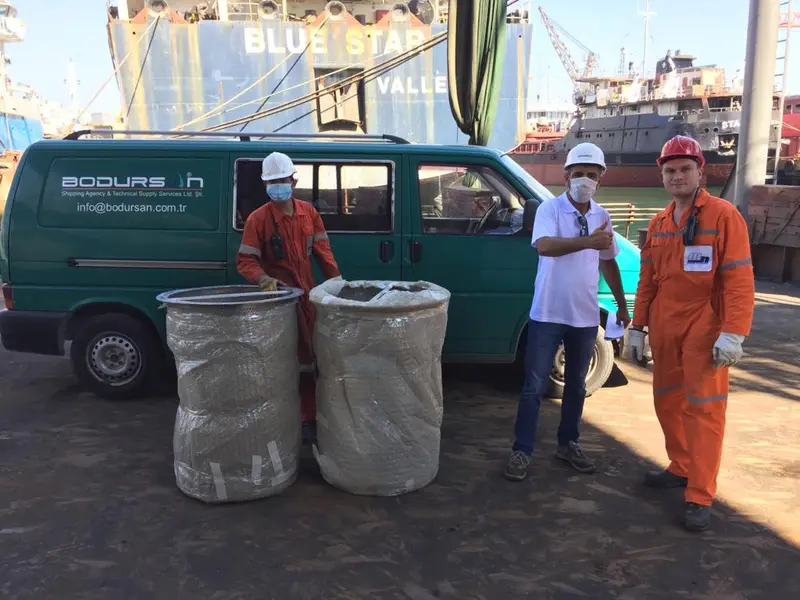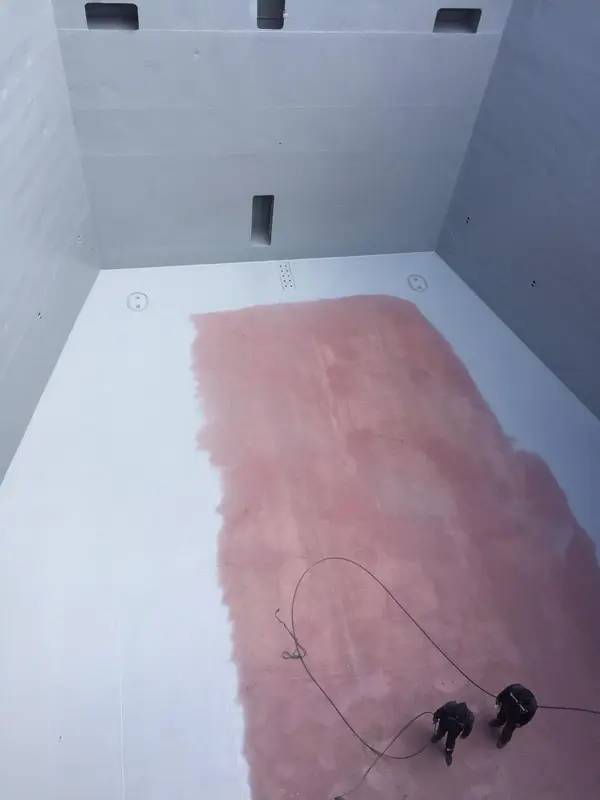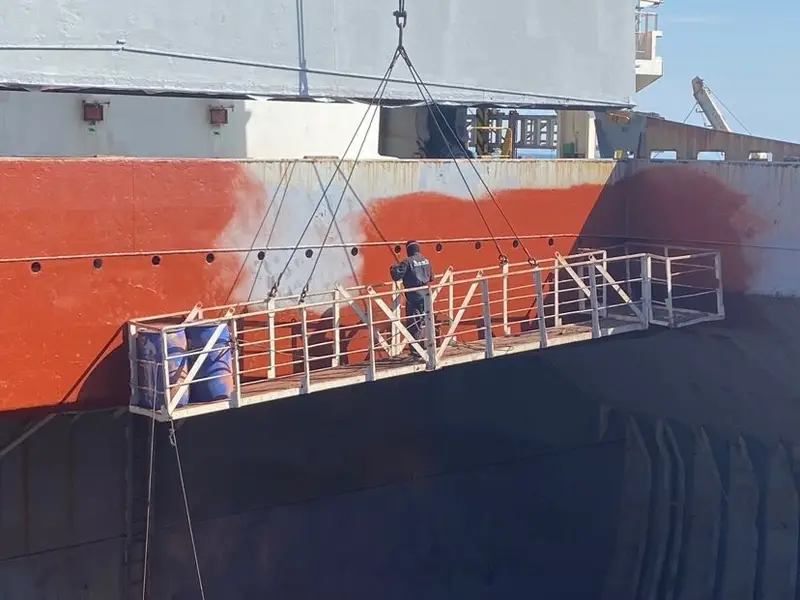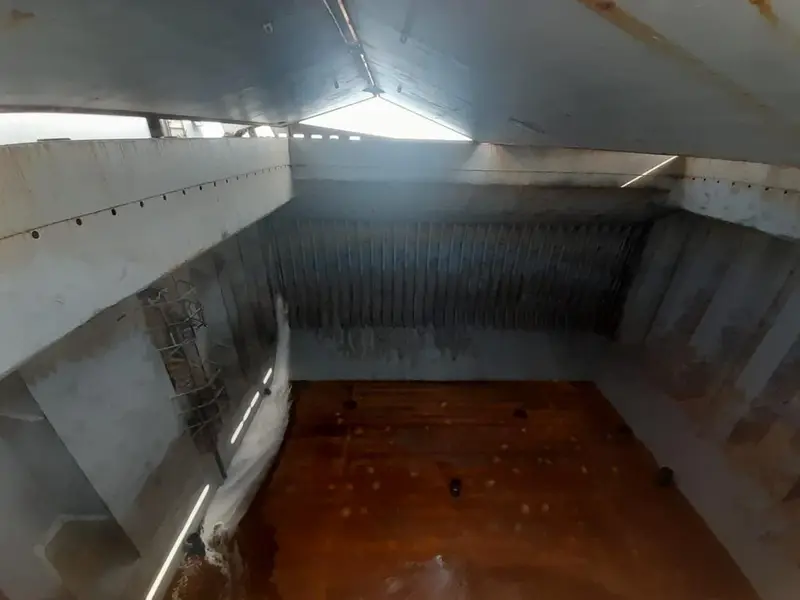
Over time, cargo and ballast tanks collect mud, sediment and hardened residues that washing machines alone cannot remove. Bodursan organises demucking teams to clear these deposits by hand and with mechanical tools, so the tanks are ready for washing, gas freeing, inspection or repair work.
What demucking covers
- Sediment and mud removal Shovelling, scraping and bagging of mud and sediment from tank bottoms, frames and structural pockets.
- Heavy residue removal Hardened cargo residues and scale cleared from bottoms, stringers and heating coils.
- Lifting out of the tank Residues are lifted out in bags or buckets and kept separate on deck for disposal.
- Preparation for the next step Tanks are left ready for washing, gas freeing, coating work, survey or steel repair.
Related services
- Sludge cleaning For compacted sludge layers that need a dedicated removal programme.
- HP/UHP water washing For residues that remain on the steel after demucking.
- Fine cleaning When the next cargo or a wall-wash test requires a higher standard.
- Waste disposal For the sludge and residues generated during the job.
To plan the job, send us the last cargoes, the tanks involved, the estimated residue volume, the next employment and where the vessel will be. We will come back with a programme that fits the port call or yard period.
Why Bodursan
- Planned with the port call Our agency team aligns crews, permits, waste reception and yard or terminal slots, so cleaning does not hold the vessel up.
- Safety first in enclosed spaces Gas measurements, entry permits, ventilation and standby arrangements are in place before anyone enters a tank.
- Waste handled properly Every residue removed from the tanks is collected, delivered to authorised receivers and documented for the ship's records.
- Coverage across Turkey From the Tuzla head office we work in Tuzla, Yalova and Izmit Bay shipyards, at Istanbul and Dardanelles anchorages and in the main Turkish ports.